
Concrete vs Asphalt: Which Is Better for Driveways?
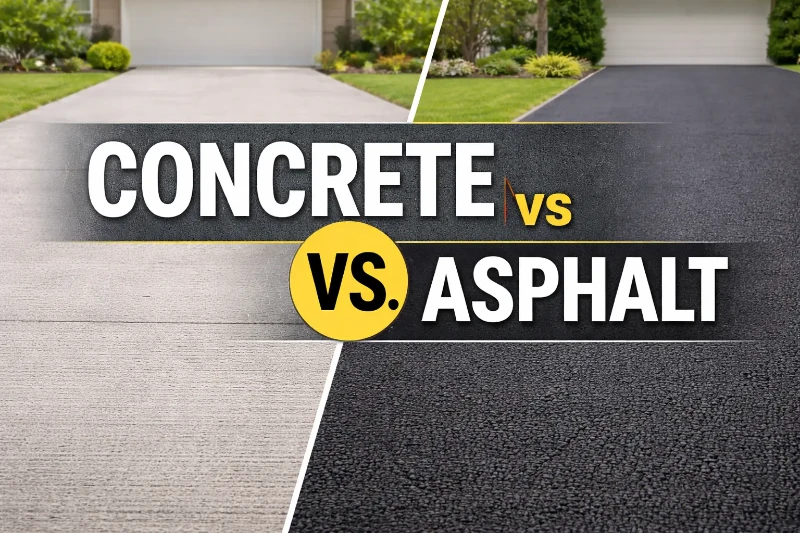
When planning a new driveway or replacing an old one, homeowners often face the same question: Concrete vs Asphalt? Both materials are commonly used for residential driveways, but they differ significantly in durability, appearance, maintenance, and long-term value. Understanding the differences between concrete and asphalt driveways helps you choose the option that best fits your home, budget, and local climate.
What Is a Concrete Driveway?
A concrete driveway is made from a mixture of cement, sand, gravel, and water, poured into place and allowed to cure into a solid surface. Once hardened, concrete becomes highly durable and capable of supporting vehicle loads for decades.
Concrete driveways are popular because they offer a clean appearance and multiple finish options, including broom finish, stamped patterns, and exposed aggregate. When installed correctly, concrete provides long-term performance with minimal structural issues.
What Is an Asphalt Driveway?
An asphalt driveway is made from a mixture of bitumen (a petroleum-based binder) and aggregate. Asphalt is installed hot and compacted to create a smooth, flexible surface.
Asphalt driveways are often chosen for their lower upfront cost and faster installation time. They are commonly used in residential and commercial settings where quick access is needed.
Concrete vs Asphalt Driveways: Key Differences
Below is a clear comparison to help highlight the differences between these two driveway materials.
| Feature | Concrete Driveway | Asphalt Driveway |
|---|---|---|
| Material Type | Cement-based composite | Petroleum-based mix |
| Appearance | Light, clean, customizable | Dark, uniform |
| Installation Time | Longer curing time | Faster installation |
| Load Capacity | Very high | Moderate |
| Heat Resistance | Performs well | Can soften in heat |
| Maintenance | Low | Moderate to high |
| Average Lifespan | 25–40+ years | 15–20 years |
Durability and Lifespan
Concrete driveways are known for their long service life. When properly installed and cured, concrete can last several decades without major repairs. It resists deformation under heavy vehicles and does not soften in high temperatures.
Asphalt driveways are more flexible, which can help in colder climates, but they tend to wear down faster over time and require resurfacing or replacement sooner than concrete.
Cost Comparison: Concrete vs Asphalt Driveways
| Cost Factor | Concrete Driveway | Asphalt Driveway |
|---|---|---|
| Initial Installation Cost | Higher upfront cost | Lower upfront cost |
| Maintenance Frequency | Low (occasional sealing) | High (regular sealing & patching) |
| Maintenance Cost Over Time | Low to moderate | Moderate to high |
| Repair Needs | Infrequent, usually minor | More frequent surface repairs |
| Replacement Timeline | 25–40+ years | 15–20 years |
| Long-Term Value | High | Moderate |
Maintenance and Repairs
Concrete requires minimal maintenance. Small cracks can occur due to settling or expansion, but these are usually manageable and do not affect structural integrity when addressed early.
Asphalt requires regular sealing every few years to protect against moisture, UV exposure, and surface wear. Without maintenance, asphalt can develop potholes and surface breakdown.
Which Driveway Is Better for Hot Climates?
In hot climates, concrete generally performs better. Asphalt absorbs heat, which can cause it to soften, fade, or become sticky during extreme temperatures. Concrete reflects more heat and maintains surface stability even during prolonged heat exposure.
Which Driveway Is Better for Your Home?
- Choose concrete if you want long-term durability, minimal maintenance, and improved curb appeal.
- Choose asphalt if you need a lower upfront cost and faster installation, and are prepared for regular maintenance.
The best option depends on your budget, climate, and how long you plan to stay in your home.
Pros and Cons Summary
Concrete Driveway Pros
- Long lifespan
- Strong load-bearing capacity
- Low maintenance
- Clean and customizable appearance
Asphalt Driveway Pros
- Lower initial cost
- Faster installation
- Easier short-term repairs
Final Verdict: Concrete or Asphalt Driveway?
Both materials have their place, but for homeowners seeking durability, performance, and long-term value, concrete driveways are often the better investment. Asphalt can be suitable for short-term or budget-focused needs, but concrete consistently delivers stronger performance over time. Choosing the right driveway material starts with understanding your priorities, and working with experienced professionals ensures lasting results.
